
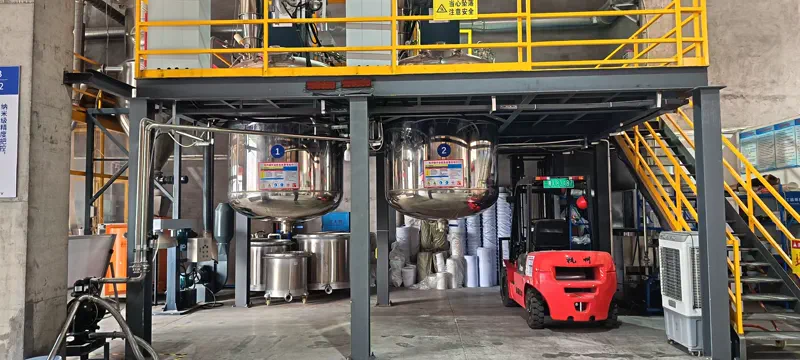
Overview
Latex wall paint is the modern form of emulsion paint: a waterborne acrylic or styrene-acrylic dispersion that dries by the evaporation of water rather than by solvent oxidation. That single difference is why latex paint has almost entirely replaced oil-based wall paint in both residential and commercial markets.
The benefits are substantial: low odour, no flammable solvent, fast recoating, water-based cleanup, good colour retention and the availability of specialised grades for specific problems — mildew resistance in humid rooms, elasticity and crack-bridging on moving substrates, texture for exterior render, and real stone-effect finishes for architectural work.
Delshine manufactures a broad latex range: high-quality interior emulsions, mercerised and high-gloss interior grades, mildew-proof grades, exterior emulsions including premium and super-mercerised grades, high-elasticity crack-bridging grades, textured grades and stone-effect real stone paint.
Product identification
The identifiers below are the ones printed on the drum and quoted on the purchase order. Always order and dispatch by code, because the grade and the zinc or temperature variant cannot be inferred from the trade name alone.
| Product code | DS-N01 |
|---|---|
| Trade name | High-Quality Interior Wall Latex Paint |
| Category | Latex and wall coatings |
| System role | Topcoat - exposed finish of the system |
Where this product is used
- Interior residential and commercial wall and ceiling painting
- Exterior residential and commercial wall painting
- Bathroom and kitchen walls in humid conditions
- Masonry, concrete, plaster and cement board substrates
- Retail, hospitality and office interiors
- Textured and decorative exterior finishes
- Real stone-effect architectural rendering
- Renovation and repainting of existing painted surfaces
How it works in the coating system
The topcoat is the visible, exposed layer of the system. It provides the colour, the gloss and the final resistance to weathering, UV, chemicals and mechanical wear — the properties the specifier and the owner actually see and rely on.
Because it is the only coat fully exposed to the service environment, the choice of topcoat chemistry is the single decision that most affects how a coating system ages. A system that is under-specified at the topcoat will look good on day one and disappoint in five years.
Purpose in the system: The final coat of the system, applied over the intermediate coat.
Technical properties
The values below are the typical published range for this product family. The exact figures for your batch are confirmed on the batch certificate and the current technical data sheet.
| Role in the coating system | Architectural wall paint — interior, exterior, texture and elastomeric grades |
|---|---|
| Volume solids | 50–70 % |
| Mixing ratio by volume | Single component; stir before use and thin with water |
| Typical dry film thickness | 40–120 µm per coat; 0.5–3.0 mm for the textured grades |
| Theoretical coverage | 8–12 m²/litre per coat for the smooth grades |
| Application methods | Brush · roller · airless spray · textured spray |
| Application temperature window | 5–40 °C, minimum 3 °C above dew point |
| Suitable substrates | Cement render, plaster, concrete, gypsum board, masonry |
| Finish / appearance | Matt, satin, eggshell, semi-gloss; textured and stone-effect finishes |
| Principal resistance | Weather, washability, mould, alkali, elasticity |
| UV resistance | Excellent for the exterior grades — no chalking for 5 years and more |
| Adhesion to prepared steel | > 1.0 MPa pull-off on render |
| Salt spray performance | Not applicable |
| Chemical resistance | Good against alkali and mild household detergents |
| Abrasion resistance | Washable; scrub resistance depends on the sheen level |
| Flash point | Not applicable (water-based) |
| Shelf life | 12–24 months unopened, protected from freezing |
| Density | 1.05–1.35 g/cm³ |
| Pack sizes | 1 L · 4 L · 20 L · 200 kg drums |
Surface preparation
- Ensure the substrate is clean, dry, sound and free of loose material, dust, efflorescence and previous flaking paint.
- Fill nail holes, cracks and minor defects with a suitable interior or exterior filler and sand flush.
- Remove all existing loose or flaking paint by scraping and wire brushing, then feather the edges and sand smooth.
- Wash the surface with a mild detergent solution to remove grease and dirt, and rinse with clean water.
- Prime bare plaster, new masonry, patched areas and any previously painted surface with a suitable primer — use an alkali-resistant primer on fresh cement-based render.
- Allow the surface to dry fully before painting. Painting over damp plaster will cause adhesion failure and peeling.
Application procedure
Apply by spray for the best appearance and film uniformity, by roller for large flat areas, or by brush where access is restricted.
Aim for a consistent wet film across the whole area. Overlapping passes should be kept wet to avoid a lap line in the finish.
Plan the work so that the coating is applied in manufacturable quantities — a full kit should be mixed and used within the pot life, and any surplus should be discarded rather than saved.
Mixing, ratio and induction time
Two-pack finishes are mixed at the ratio stated on the data sheet, commonly 4:1 or 5:1 by volume for epoxy and 3:1 for polyaspartic and acrylic polyurethane. Use a proper mixing gauge — a mix that is even a few percent off ratio will cure differently and may not meet the published properties.
Cure, recoat window and service readiness
Surface dry in 2 to 6 hours, recoatable in 12 to 24 hours, and fully cured in 7 days. Do not place the structure into service, immersion or heavy loading before full cure, even though the surface will feel dry much earlier.
Coverage and thickness calculation
Typical dry film thickness is 60-100 µm for a conventional finish and 40-60 µm for a high-build polyurethane finish. At 80 µm, one litre covers roughly 8-10 m². Two coats are usually specified where colour, gloss uniformity or coverage hiding matter.
Technical note. Coverage (m²/litre) = (volume solids × 10) / DFT (µm)
Worked example
| Specified DFT | 60 µm |
|---|---|
| Volume solids | 60 % |
| Theoretical coverage | 10.00 m²/litre |
| Total for the area | 100 m² → 1000.0 litres |
Advantages
- Water-based, so very low odour, non-flammable and safe to use in occupied buildings.
- Fast drying with short recoat intervals, allowing two coats in a single day.
- Excellent colour retention with minimal chalking and yellowing.
- Good adhesion to correctly prepared plaster, masonry, drywall and previously painted surfaces.
- Specialised grades solve specific problems: mildew resistance in humid rooms, elasticity for cracking substrates, texture for render finishes.
- Easy water-based cleanup of brushes, rollers and tools.
Limitations and precautions
- Will not tolerate freezing during storage or application.
- Requires proper surface preparation — painting over loose or flaking paint causes peeling.
- Not suitable for surfaces with persistent dampness or efflorescence without a suitable primer and moisture control.
- Application in cold or humid conditions extends drying times and can cause poor film formation.
- Standard interior grades are not suitable for exterior exposure or for high-wash areas.
Storage and shelf life
- Store in original sealed containers in a cool, dry, ventilated place between 5 °C and 35 °C.
- Protect from frost and direct sunlight — latex paint that has been frozen must be discarded.
- Keep containers tightly closed to prevent skinning and contamination.
- Rotate stock first-in-first-out and observe the labelled shelf life, typically 12-18 months unopened.
Safety, PPE and ventilation
- Water-based latex paint is low hazard, but wear gloves and safety goggles when mixing and rolling.
- Provide ventilation in enclosed spaces and wear a respirator when spraying.
- Do not apply in temperatures below 5 °C or above 35 °C.
- Keep children away from the work area and from any wet paint.
- Wash tools with water; no solvent is required for cleanup.
Quality control and inspection
- Check colour and gloss against the approved sample or RAL reference before starting the full area.
- Measure DFT and check for thin spots, particularly over welds, edges and connections.
- Inspect the finished surface for lap marks, sag, orange peel, dust inclusion and solvent entrapment before accepting the coat.
Pricing and how to order
Delshine quotes this product per square metre at a specified dry film thickness, or per drum/litre depending on the project. The material cost is usually the smallest part of the installed cost — surface preparation, access and application labour dominate. Send us the substrate, the service conditions and the required DFT and our technical team will return a full system recommendation with a firm price.
Latex wall paint is priced per litre or per drum, and coverage depends on the substrate and the film build — typically 10-14 m² per litre per coat on a porous surface and up to 16 m² on a sound painted surface. Budget for primer on new and repaired surfaces, filler for preparation, and allow 10-15% for waste and touch-ups.
Frequently asked questions
The questions below are the ones our technical team is asked most often about this product family.
What is the difference between latex and oil-based paint?
Latex paint is waterborne: the binder is dispersed in water and dries as the water evaporates. Oil-based paint uses a solvent that evaporates. Latex is faster to dry, has far less odour, is non-flammable, cleans up with water and holds colour better. Oil-based is slower and more solvent-heavy but was historically more durable on demanding exterior surfaces, a gap that modern exterior acrylic latex grades have largely closed.
Can latex paint be applied to new plaster?
Yes, but only after the plaster has cured properly — normally at least four weeks for cement plaster, and longer for gypsum-based products. Fresh plaster is highly alkaline and will attack the acrylic binder. Use an alkali-resistant sealer such as the DSAG-301 transparent alkali-resistant sealing primer before the first coat.
How many coats of latex paint do I need?
Two coats on a previously painted surface, and two or three on new plaster, bare masonry or where a colour change is substantial. The first coat on porous or new surfaces absorbs into the substrate and does not hide the surface; the second provides the colour and opacity.
Why is my latex paint peeling?
Peeling is almost always a preparation or moisture problem, not a paint problem. The usual causes are painting over loose or flaking paint, painting onto a damp surface, failing to prime new plaster or patched areas, and applying paint in cold or humid conditions. Remove all the failed paint, correct the cause, prime appropriately and recoat.
Can latex paint be used in a bathroom or kitchen?
For bathrooms and kitchens, use a dedicated mildew-proof or washable grade — the DSN06 super mildew-proof interior wall latex is formulated for humid rooms and areas with persistent condensation. On very wet surfaces, ensure the underlying damp problem is treated first; no paint will hold if water is coming through the wall.
What is high-elasticity exterior latex paint used for?
High-elasticity exterior grades (DST40 and DST120) are formulated to bridge hairline cracks and accommodate substrate movement — the thermal expansion and contraction that opens micro-cracks in render and masonry over a few years. They are the right choice on new render, on structures with movement, and wherever recurring cracking has been a problem. The textured DST120 variant also adds a decorative surface texture.
Related products
These products are normally used in the same system as the product described above.
Comments (0)
Real feedback from engineers and contractors who work with these systems every day.