
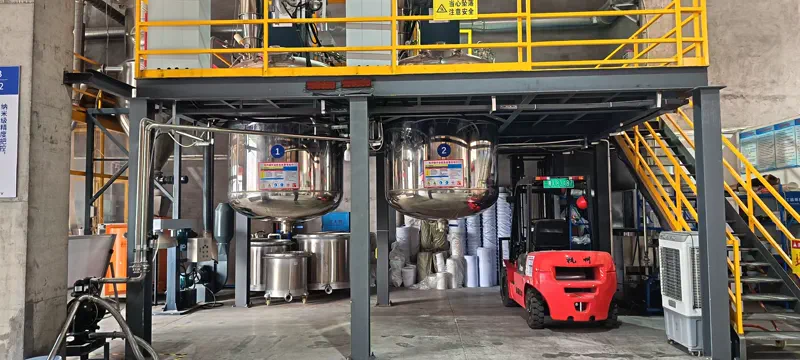
What is polyurea coating?
Polyurea coating is a fast-curing, two-component polyurethane polymer coating that is sprayed or hand-applied as a liquid and cures within seconds to hours. It is one of the most widely searched protective coating keywords on the internet, and for good reason: polyurea is used to line oil and fuel tanks, bunds, pipelines, offshore structures, bridges, floors, concrete, steel and even aquariums and food-processing plants.
The name causes a lot of confusion, because polyurea is used in the industry to describe several quite different products. When you search for "polyurea coating price" or "polyurea spray equipment", you will find references to 1st generation aromatic polyurea, 3rd generation polyaspartic polyurea, hand-applied 4:1 polyurea, and single-component polyurea. They all belong to the polyurea family, but they are not interchangeable, and they are not applied the same way.
We manufacture the full polyurea range at our own factory and we supply it worldwide. This guide covers everything a specifier, contractor or buyer normally needs to know: the types of polyurea, how polyurea compares to epoxy and polyurethane, curing time, coverage per square metre, mixing ratios, surface preparation, the equipment you need, and what polyurea coating actually costs per square metre.
Types of polyurea coating
1st generation polyurea (100% aromatic spray polyurea)
This is the original, heavy-duty polyurea. It is a 100% aromatic polyurethane urea polymer with no aliphatic content, and it is always sprayed with a plural-component high-pressure spray machine that heats both components to roughly 60–80 °C before they meet at the spray gun.
- Best for: large tanks, crude oil and fuel storage, chemical bunds, offshore platforms, heavy-duty industrial work, ballast tanks.
- Advantages: the best chemical resistance of the family, very fast cure, excellent abrasion resistance, high tensile strength, no solvent required.
- Limitations: the most expensive option, needs heated plural-component spray equipment, UV sensitive (chalk and discolour unless an aliphatic topcoat is applied), and it will not adhere to a damp substrate.
If you have ever seen the phrase "high pressure spray polyurea" or "100% aromatic polyurea" in a specification, this is the product being described.
3rd generation polyurea (polyaspartic / polyurea-polyaspartic hybrid)
This is the modern generation and it is the fastest growing part of the market. It is an aliphatic polyaspartic ester or a polyurea-polyaspartic hybrid that cures by moisture reaction at ambient temperature.
- Best for: structural steel, pipework, tanks, bridges, architectural and marine work, retrofit and repair, and any site that does not have spray equipment.
- Advantages: applied by brush, roller or a small airless spray machine — no heating and no high-pressure plural-component rig; long pot life and a long working time; very good UV resistance, so it can be a topcoat without a separate aliphatic layer; recoats are fast; low viscosity so it flows into edges and complex geometry.
- Limitations: generally a thinner film per coat than 1st generation aromatic, slightly lower solvent and chemical resistance than aromatic, and it needs good ventilation because it is solvent-borne.
This is the system most people mean when they search for "polyaspartic coating" or "3rd generation polyurea", and it is the one that is expanding fastest in the Middle East, South America and Southeast Asia.
Hand-applied 4:1 polyurea
A two-component polyurea with a 4:1 mix ratio by volume that can be brushed, rolled or airless-sprayed without any heating. It is the practical choice for complex geometry, bunds, confined areas, repair patches and sites with no spray rig.
Single-component polyurea
A moisture-curing one-pack used for smaller areas, touch-up and repair where mixing equipment is not available. It is a different chemistry with different performance, so it should not be specified as a substitute for a two-component system on a critical tank.
Polyurethane coating vs polyurea coating
Conventional polyurethane is also a two-component system, but it cures much more slowly (typically 24–72 hours), it is more sensitive to substrate moisture and it is more prone to chalking and UV degradation. Polyurea is essentially the fast, tough, chemically resistant evolution of polyurethane — if a specification calls for polyurethane and the service is aggressive, a polyurea system will usually outlast it.
Polyurea coating vs epoxy coating
This is the most common comparison in the polyurea coating market, so here is the honest comparison.
| Property | Polyurea | Epoxy |
|---|---|---|
| Cure time to recoat | Minutes to a few hours depending on the system | 8 to 24 hours per coat |
| Full chemical cure | 24 to 72 hours | 7 to 14 days |
| Return tank to service | Same day to next day | Several days |
| Flexibility | Very high — resists cracking and impact | Rigid — can crack on movement |
| Adhesion to steel | Excellent with correct surface prep | Good, but sensitive to substrate moisture |
| Adhesion to concrete | Excellent | Good when dry |
| UV resistance | Aliphatic topcoat available, very good | Chalks quickly unless overcoated |
| Water immersion | Excellent | Good above 10 °C |
| Acid / alkali resistance | Excellent | Good for some acids, limited in alkalis |
| Fuel / crude oil | Excellent | Softens with certain fuels |
| Elongation at break | Several hundred percent | Typically under 5% |
| Temperature resistance | Wide range, product dependent | Limited, usually up to 60–80 °C |
In short: epoxy protects by forming a hard, rigid barrier bonded to the substrate, and it depends on that bond staying intact. Polyurea protects by forming a tough, flexible membrane that tolerates movement and resists the chemical attack that eats through rigid films. If the substrate moves, the steel flexes, the temperature swings, or the liquid inside is aggressive, polyurea wins. If the tank is static, dry and mild, epoxy is perfectly adequate and cheaper.
How fast does polyurea cure?
Curing time is the number one reason clients switch to polyurea, so it is worth being precise:
- Gel time: the material stops flowing. For 1st generation aromatic spray polyurea this is typically a few seconds; for 3rd generation polyaspartic it is 20–90 minutes depending on temperature and the hardener used.
- Recoat window: 1st generation can be recoated in minutes; 3rd generation is typically recoated within 4–24 hours and can often be recoated wet-on-wet.
- Full cure: 24–72 hours for polyurea versus 7–14 days for a full epoxy system.
- Return to service: a tank lined in polyurea can usually be filled the same day or the next day. With epoxy you lose several days per tank.
Temperature matters. In hot climates (40 °C and above) the gel time shortens considerably, so fewer passes per coat may be needed. Ask your supplier for the recommended warm-weather application window before you start.
Polyurea coverage per square metre and mixing ratios
Coverage is where most cost surprises happen, so work it out before you order.
| System | Mix ratio by volume | Typical coverage per coat | Film thickness per coat |
|---|---|---|---|
| 1st gen aromatic spray polyurea | 1:1 by volume | approx. 1.5–2 m² per litre | up to 2–4 mm |
| 3rd gen polyaspartic / hybrid | 1:1 by volume (some 3:1, 4:1) | approx. 3–5 m² per litre | approx. 100–200 µm wet |
| Hand-applied 4:1 polyurea | 4:1 by volume | approx. 2–3 m² per litre | approx. 0.5–1 mm |
| Single-component polyurea | 1 pack, no mixing | approx. 2–4 m² per litre | approx. 200–400 µm |
Three rules for getting the real quantity right:
- Measure the surface, not the plan. Tank interiors include floors, walls, roof, nozzle welds, and all the internals. Add 10–15% for wastage, overmixing losses, holidays and rework — this is normal on any spray job.
- Coverage is wet-film, not dry-film. Every data sheet lists the theoretical spread rate at a specific dry film thickness. Ask for both and do the conversion yourself.
- Do not forget the primer. Primer, activator and any thinner are additional volume on the order of 10–20% of the topcoat.
Full mixing ratios, coverage rates and technical data sheets for every system are on the Polyurea products page.
Polyurea coating price per square metre
There is no single price for polyurea coating, because the range is wide and the final number is driven by the system, the thickness, the substrate and the labour. The honest way to read a polyurea quote is to break it into four parts:
- Material cost — the coating itself, per litre, at the specified dry film thickness. This is where 1st generation aromatic and 3rd generation polyaspartic differ the most.
- Surface preparation cost — abrasive blasting to Sa 2½ or diamond grinding. For most tank jobs this is a large share of the total and it is not optional.
- Application cost — spray equipment, operators, containment and the schedule impact. Spray polyurea is faster per square metre but needs a rig; brush-applied polyaspartic is slower but needs almost no equipment.
- Access and shutdown cost — often the biggest number of all, and the reason polyurea wins on life-cycle cost. A tank returned to service a week earlier pays for itself.
On a life-cycle basis, polyurea coating price per square metre is often lower than epoxy despite a higher material price, because you are not stripping and recoating a failed epoxy system twice over a ten-year life, and because the tank is back in production faster. If you are comparing quotes, ask each supplier for the full system — primer, body coat, topcoat, prep and labour — at a stated dry film thickness, not just the price per litre.
Surface preparation — the part that decides the job
No coating, of any type, will outlast bad preparation. For polyurea the requirement is straightforward:
- Mechanical preparation of steel to Sa 2½ (SSPC-SP 10 / ISO 8501-1) with a clean, angular profile.
- Concrete: diamond grinding or shot blasting to open the surface, and complete removal of laitance.
- The substrate must be dry. Polyurea is moisture-sensitive — water trapped in the substrate or in a thick coating will cause blistering or delamination.
- Test for soluble salts on any marine or industrial site before priming.
- Use a compatible primer from the Delshine range, and observe the minimum overcoat window.
- Measure the dry film thickness (DFT) of the cured coating on a holiday test, and record it. DFT checks are part of the inspection, not an optional extra.
Polyurea spray equipment requirements
If you are searching for polyurea spray equipment, this is the specification that keeps a spray job consistent from the first drum to the last.
- Plural-component spray machine with a pressure ratio of roughly 40:1 to 60:1.
- Output of about 3–6 litres per minute, matched to the nozzle and the film thickness you need.
- Heater capacity to bring both components to 60–80 °C and hold them there, with good temperature control.
- Agitating and heated drums so the material does not settle or freeze in the drum between batches.
- Long, correctly sized hoses — too much hose pressure drops the mix ratio and ruins the film.
- Air supply sufficient for the atomising air and for extraction, with correct PPE and respirator protection for the operator.
For 3rd generation polyaspartic and hand-applied 4:1 polyurea none of this is needed — a brush, roller or small airless spray machine is enough. That is one of the biggest reasons polyaspartic has grown so quickly in the field-repair and construction market.
Polyurea coating applications
Where you will find polyurea coating being used around the world:
- Tank lining — crude oil, fuel, potable water, chemical and process tanks.
- Bunds and containment — chemical plants, refineries, tank farms, loading bays.
- Pipelines — internal lining and external pipe coating for oil, gas and water.
- Offshore and marine — splash zones, deck equipment, sea tanks, ship hulls.
- Steel structures — bridges, cranes, conveyor galleries, wind and pipe towers.
- Concrete — industrial floors, car parks, warehouses, water-retaining structures, sewage plants.
- Water and wastewater — clarifiers, tanks, digesters, potable water contact surfaces.
- Food and pharmaceutical — areas requiring a fast return to hygiene-compliant service.
Frequently asked questions about polyurea coating
How long does polyurea coating last?
Correctly specified and applied to a properly prepared substrate, a polyurea lining in a well-controlled service lasts 10 to 25 years. In aggressive immersion service (crude, fuel, chemicals) expect 8–15 years; in a mild atmospheric or containment service, considerably longer. The life is governed far more by surface preparation and DFT than by the brand name.
Can polyurea be applied over concrete?
Yes. Polyurea has excellent adhesion to concrete, and its flexibility means it bridges shrinkage cracks and movement joints better than rigid epoxy. The concrete must be sound, laitance-free and dry. Grind or shot blast, prime with a compatible polyurea primer, and apply the coating while the primer is still within its overcoat window.
Can polyurea be sprayed in cold weather?
There are limits. Below about 5 °C substrate temperature, most polyurea systems will not cure properly, and the coating may remain soft or "tacky" indefinitely. 3rd generation polyaspartic has a wider low-temperature window than 1st generation aromatic, and some products are formulated for 0 °C. Always confirm the minimum substrate temperature with the supplier before starting.
Is polyurea coating food safe?
Polyurea can be used in food and beverage plants and potable water systems, but you must specify a product that carries the relevant certification for the specific contact — FDA, EU 1935/2004, or a local water-contact approval. Not every polyurea is certified, and the certificate must match the exact product grade.
Does polyurea need a topcoat?
1st generation aromatic polyurea usually does, because it chalks and discolours under UV exposure; an aliphatic topcoat is applied over it. 3rd generation polyaspartic is inherently UV stable and is very often used as the topcoat itself.
What is the difference between polyurea and polyaspartic?
Polyaspartic is a sub-family of polyurea. Polyaspartic esters are aliphatic and cure quickly at ambient temperature with a long pot life. The term "3rd generation polyurea" is used commercially to mean polyaspartic or a polyurea-polyaspartic hybrid. Both are two-component, both are called polyurea in the market, and both are legitimate — but they behave differently enough that you should specify them by their actual chemistry, not by the marketing label.
Can polyurea be applied in winter or at night?
Yes, and doing so is often the practical way to keep a project on schedule. Polyurea needs no daylight to cure and no heat source beyond the substrate temperature limit. In cold climates, plan for heated enclosures or simply schedule the work in the warmest part of the day and use a low-temperature grade where required.
How do I calculate how much polyurea I need?
Measure the total surface area to be coated, including floors, walls, roof, internals and details. Divide by the coverage per litre from the data sheet at your target dry film thickness. Add 10–15% for wastage and rework. Add the primer, thinner and activator volumes. For spray jobs, always order a full drum rather than mixing partial kits — once opened, a drum is the unit you consume.
What primer do I use for polyurea on steel?
A two-component epoxy or polyurethane primer specifically approved for polyurea, or a polyurea primer where a fully coherent polyurea system is required. Solvent-based single-pack primers are generally not suitable. Compatibility matters — always have the primer and topcoat approved as a system by the manufacturer.
How long should I wait before filling a tank lined with polyurea?
Follow the product data sheet for full cure. As a practical rule, 24 hours is usually sufficient for 3rd generation polyaspartic, and 48–72 hours for 1st generation aromatic. For fuel or potable service, run the manufacturer's own cure verification before filling.
Is polyurea cheaper than epoxy?
Per litre, no — polyurea usually costs more, especially 1st generation aromatic. Per square metre over a full life cycle, very often yes, because of the faster return to service and the far lower chance of a failure that forces you to strip and redo the tank.
Why work with Delshine for polyurea
We supply polyurea, polyurethane, epoxy and aerogel systems from our own factory, and we support every job we quote with application guidance, mixing ratios, coverage rates and on-site troubleshooting. We supply 1st generation aromatic spray polyurea, hand-applied 4:1 polyurea, single-component polyurea and the 3rd generation polyaspartic and hybrid grades. Technical data sheets, mixing ratios and coverage figures are on the Polyurea products page.
Send us the project details — the medium, the temperature, the substrate and the area — and we will specify the exact system and thickness, plus the equipment you will need and a realistic cost per square metre. If you need a polyurea coating sample, we will send one.
Comments (5)
Real feedback from engineers and contractors who work with these systems every day.
We lined a 400 m³ crude oil tank with 3 mm polyurea two years ago and it still looks almost new. The previous epoxy coating had blistered within eight months because the substrate was never properly dried.
Very useful breakdown. One thing to add for anyone in a hot climate — we had to reduce the number of passes per coat in summer because the gel time is much shorter at 40 °C. Ask the supplier about the warm-weather application window.
The cost comparison matters more than people think. Over a 10 year life cycle polyurea came out cheaper for us because we did not need to strip and redo the epoxy twice. Fast return of tank availability is the real saving.
We used the hand-applied 4:1 polyurea for a bund with a lot of rebar in the concrete and it was far more forgiving than epoxy. The only issue was needing to keep the substrate dry from rain for a few hours.
Add testing for soluble salts before priming on any marine or industrial site. We had a failure on a first job because we skipped the salt test on a substrate near the sea. The technical support team at Delshine talked us through the right primer and the job passed on the retry.